
Campus Chaos Sim
Dev_studioRole Playing
3.3113.00 Reviews
- Version
- 513
- Installs
- 1.00M
- Age Rating
- Everyone
Screenshots



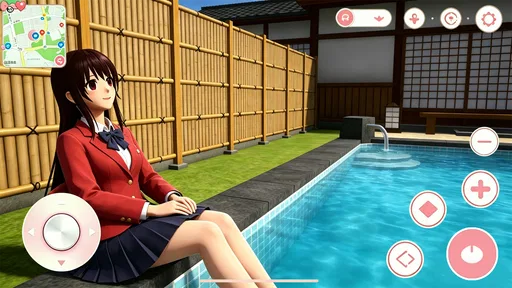
Our Review of Campus Chaos Sim
 Analysis by Appyee
Campus Chaos Sim is a role-playing game built around the idea of campus life turning into an unpredictable playground. I approached it expecting a light, casual experience rather than a serious story-driven adventure, and that is the right mindset here. Its appeal comes from the setting and the promise of open-ended fun, not from the polished structure of a traditional role-playing epic.
Created by Dev_studio, the game is free to play and suitable for Everyone. It first appeared on June 14, 2020, and has grown to more than a million installs. That reach tells me it has found an audience among players who want a quick campus-themed diversion, even though its average score sits at 3.2 from roughly 9.9 thousand ratings. I would read that combination as a sign of curiosity and accessibility, but also as a reason to keep expectations realistic.
How the campus setting shapes the experience
The most important thing to understand is that this is not simply a school-themed skin placed over a conventional quest game. The campus concept is the center of its identity. You are meant to enjoy the disorder, the social setting and the feeling that ordinary student surroundings can become the stage for playful role-playing.
That makes it suitable for short sessions when I want something less demanding than a large fantasy game. I can imagine opening it while waiting for an appointment, taking a few minutes to explore or experiment, and closing it without feeling that I have abandoned a complicated campaign. The setting gives those brief sessions a recognizable flavor, which is more memorable than an anonymous collection of levels.
At the same time, the campus theme will not work equally well for everyone. Players looking for deep character development, carefully balanced combat or a long-form narrative may find the experience too loose. The game’s charm depends on accepting a certain amount of chaos. If I wanted a tightly directed role-playing adventure with a clear progression path, I would choose a more traditional alternative instead.
The short store description calls it a campus chaos simulation, and that description points toward the intended mood without promising a heavyweight simulation. I would treat it as a playful role-playing sandbox rather than a detailed recreation of academic life. That distinction matters because it changes how I judge the game: spontaneity and immediate amusement count for more than realism.
What to expect during a normal session
My practical advice is to begin with a short trial rather than committing to a long play period. Spend the first session learning how the campus responds to your actions and noticing whether the loose structure feels entertaining or aimless. This is a better test than judging it from the theme alone, because some players enjoy improvisation while others need explicit objectives to stay engaged.
The game is particularly well suited to players who enjoy experimenting. Instead of approaching every moment as a task to complete as efficiently as possible, I would look for amusing situations and unexpected interactions. That approach makes the setting feel more alive, while a completion-focused approach may expose the lack of structure more quickly.
A realistic everyday use case would be a short evening break after work or study. I might play for a while when I want something colorful and undemanding, then move on to another app without needing to remember a complicated plot. For that purpose, the campus setting is a strength. It gives the session a clear identity even when I am not pursuing a major objective.
Speed expectations on different phones
The minimum operating-system requirement is Android 6.0, so the game is available to a broad range of Android devices. That does not automatically mean every phone will deliver the same experience. A device that comfortably handles modern three-dimensional games may feel more responsive than an older phone that is close to the minimum software requirement.
I would judge the game’s speed in practical terms: how quickly it opens, how smoothly the campus responds and whether movement remains comfortable during busy moments. Because this is a role-playing game centered on an active environment, responsiveness matters more than loading a static menu. A small delay may be tolerable at launch, but repeated pauses during exploration can make the chaos feel frustrating rather than fun.
Players using an older device should start with modest expectations. Keeping other demanding apps closed before playing is a sensible habit, especially if the phone already struggles with multitasking. I would also avoid treating the minimum operating-system requirement as a promise of identical performance across all compatible hardware. It only establishes a baseline for software compatibility.
On a newer or well-maintained phone, the game is more likely to feel comfortable for casual play. That is the audience I see benefiting most from it: someone who wants a campus-themed distraction and does not need the same visual or technical polish found in larger role-playing releases.
Heavy-use moments and managing the busy parts
The most demanding moments are likely to be the ones in which the campus becomes crowded with activity or several visual elements are being handled at once. I cannot responsibly attach a frame-rate claim to those situations, but they are the points where any mobile game can reveal the limits of a device more clearly than a quiet starting area.
My useful tip is to evaluate performance after the game has been running long enough to represent a normal session, not only during the first few minutes. A phone may feel quick when freshly opened and less comfortable after several apps have been used. If the experience becomes less responsive, closing background apps and restarting the game is a simple first step.
Battery and heat are also worth considering during extended play, even though the game is free and easy to start. A campus environment with ongoing activity can demand more from a phone than a menu-based role-playing title. I would avoid playing while the device is already warm, particularly if I am using a protective case that traps heat. This is not a criticism unique to the game; it is a practical way to keep a modest phone from becoming uncomfortable.
There is a trade-off between visual activity and consistency. A busier scene can make the campus feel more entertaining, but it also gives the device more work to process. Players who value a steady, relaxed session should treat the game as a casual experience and take breaks instead of trying to turn it into an all-day title.
Reliability, recovery and the value of short sessions
Reliability is not only about whether a game opens. For me, it also includes how easily I can return after an interruption, whether a brief session feels worthwhile and how much frustration appears when the phone or operating system takes control. Campus Chaos Sim makes the most sense when I use it in compact bursts, because that limits the consequences of a pause or restart.
If I receive a call, switch to another app or need to put the phone away, I would not begin a session expecting a long uninterrupted campaign. A short-session mindset reduces the risk of losing momentum. It also matches the game’s casual identity better than planning a lengthy, carefully protected play period.
Players should pay attention to how the game behaves on their own device after an interruption. Android phones manage memory differently, and a game that was open in the background may need to reload when the system has reclaimed resources. That is normal mobile behavior, but it can still affect enjoyment. My recommendation is to test the return experience early, before investing much time in a single extended session.
The version shown for the game is 513, which indicates that the title has received substantial version progression since its original release. I would still avoid assuming that a high version number guarantees perfect stability. Updates can improve compatibility, but the real question is whether the current build behaves well on the particular phone being used.
When a problem appears, the sensible recovery order is simple: close unnecessary apps, restart the game and then restart the phone if the issue continues. Players should also make sure the device has enough free storage for ordinary system operations, because a nearly full phone can make many apps feel less dependable. These steps are more useful than immediately blaming the campus setting or abandoning the game after one poor session.
Device constraints and who should be cautious
The game’s Everyone rating makes it approachable from an age perspective, but age suitability and hardware suitability are separate questions. A young player may be able to understand the concept easily while still using a phone that has limited memory or older graphics capability. Parents choosing it for a shared device should judge the phone’s condition as carefully as the content rating.
Older hardware is not automatically disqualified. If the phone runs other three-dimensional games comfortably, this title may be perfectly usable for short sessions. However, I would be cautious with devices that already show signs of heat, slow app switching or long loading times. Those symptoms suggest that the game may feel less pleasant during busy campus scenes.
Storage planning is another practical concern. The game itself is free, but free does not mean costless in terms of device space, data use or battery. I would install it on a phone with breathing room rather than one that is constantly warning about storage. That leaves the operating system enough room to work and makes recovery from a stalled session less troublesome.
Players who expect a premium visual presentation should compare it with larger role-playing games before deciding. Those alternatives may offer more structured progression, stronger storytelling or more refined presentation, although they can also demand more powerful hardware and longer time commitments. Campus Chaos Sim occupies a lighter niche: its setting may be easier to dip into, but its loose campus humor will not replace a deep role-playing system for every player.
How it compares with usual role-playing alternatives
Compared with a conventional role-playing game, this title appears more attractive when I want an unusual setting and less pressure to follow a dramatic quest line. A standard fantasy adventure usually gives me clearer goals, stronger progression and a more deliberate sense of reward. In exchange, it may require more concentration and longer sessions.
Compared with a life simulator, the campus theme gives this game a narrower identity. A broad life simulator may provide more systems for managing routines, relationships or long-term development, while this title focuses its appeal on the disorderly campus atmosphere. I would choose the broader simulator for planning and gradual progression, but choose this one when the setting itself is the main attraction.
It also differs from competitive multiplayer role-playing games because its value is not tied to keeping up with other players. That can make it less stressful for someone who wants a personal break. On the other hand, players who need social competition, regular events or a strong online community may find a more conventional multiplayer game more satisfying.
The key trade-off is clear: this game offers accessibility and a distinctive premise, while alternatives may provide greater depth or polish. I would recommend trying it first if campus comedy and open-ended mischief sound appealing. I would skip it if the phrase “campus chaos” sounds like a warning rather than an invitation.
Small habits that improve the experience
One useful approach is to separate exploration from performance testing. Start in a quiet part of the campus and learn the controls before judging how the game handles a busier situation. This helps distinguish unfamiliarity from genuine lag and prevents an awkward opening minute from defining the entire review.
Another tip is to play with a clear session purpose. I might spend one session exploring, another testing how the environment reacts and another simply looking for amusing situations. This creates variety without pretending that the game has the same long-term structure as a large role-playing campaign.
I would also avoid running it immediately after using several demanding apps on an older phone. A clean start gives the game a fairer chance and makes it easier to tell whether a problem comes from the title or from limited device resources. If the phone remains slow after a restart, that is a stronger sign that the hardware is the limiting factor.
Finally, I would treat the free price as an invitation to test rather than a reason to overlook friction. There is little risk in trying it, but my time still matters. If the campus setting does not hold my attention after a few short sessions, continuing simply because the download cost nothing is not worthwhile.
My performance verdict
Campus Chaos Sim works best as a lightweight, campus-themed role-playing diversion for Android users who enjoy experimentation and do not require a carefully guided story. Its broad compatibility, free entry point and Everyone rating make it easy to consider, while its million-plus installs show that the concept has reached a substantial audience.
My overall view is balanced. I like the idea of using a familiar campus environment as a source of unpredictable play, and I can see the game fitting naturally into short breaks. The weaker side is the uncertainty that comes with a loose, chaotic format: players who want precise objectives, deep progression or consistently polished performance may become dissatisfied sooner than casual players.
The 3.2 average from around 9.9 thousand ratings reinforces my cautious recommendation. I would not present this as a universal role-playing choice, but I would suggest it to a friend who specifically wants a playful campus setting and has a reasonably capable Android phone. The best way to approach it is to begin with short sessions, observe how the device handles busy moments and decide based on whether the chaos feels entertaining.
For me, the final question is not whether it can replace every other role-playing game. It cannot, and it does not need to. Its value lies in offering a different mood: informal, campus-centered and easy to sample. If you want structured depth, choose another role-playing game; if you want a quick, unusual campus distraction, this is worth trying.
Privacy and Permissions
See what permissions an app requests and how it handles your data.
- Phone
- read phone status and identity
- Wi-Fi connection information
- view Wi-Fi connections
- Device ID & call information
- read phone status and identity
- Other
- view network connections, full network access
Verdict
Strengths of Campus Chaos Sim
- Fun campus-life sandbox with plenty of humorous student scenarios.
- Easy-to-learn controls make it accessible for casual players.
- Open-ended gameplay encourages experimentation and replayability.
- Varied locations give the school environment a lively feel.
- Lighthearted presentation keeps the experience entertaining and approachable.
Limitations of Campus Chaos Sim
- Some missions can feel repetitive after extended play sessions.
- Progress may become slower without optional purchases or extra grinding.
- Crowded scenes can make objectives and characters difficult to track.
- The humor may not appeal to players seeking a serious simulation.
- Performance may vary on older phones or lower-end devices.
Similar Picks in This Category
View All
Hair Dye
CrazyLabs LTD4.4

Monster High™ Beauty Salon
CrazyLabs LTD4.5

Bus Simulator - Bus Games 3D
Jima Apps4.4

Flight Pilot: 3D Simulator
Wildlife Studios4.1


Super Stylist Fashion Makeover
CrazyLabs LTD4.4
Frequently Asked Questions
What is Campus Chaos Sim?
Campus Chaos Sim is a student-life simulation game focused on managing the unpredictable situations that can happen around a busy campus. Players typically explore different locations, interact with characters, complete objectives, and deal with humorous challenges. The appeal comes from combining casual gameplay with light strategy, time management, and entertaining campus-themed scenarios rather than offering a traditional academic simulator.
How do you play Campus Chaos Sim?
Gameplay generally involves moving through campus areas, responding to events, completing missions, and making decisions that influence your progress. You may need to balance several tasks at once, interact with other students or staff, and use available resources wisely. The controls are designed to be accessible, so new players can usually understand the basics quickly, while later challenges require better planning and faster reactions.
Is Campus Chaos Sim free to download and play?
Campus Chaos Sim may be available as a free download, but the exact pricing model can depend on the Android or iOS version and the region where it is offered. Free versions of mobile games can include advertising, optional purchases, or unlockable content. Before downloading, check the official store listing for current information about in-app purchases, subscriptions, ads, and any requirements for accessing the complete experience.
Does Campus Chaos Sim require an internet connection?
The internet requirements can vary depending on the version and the features included by the developer. Basic gameplay may work offline if the game stores its content locally, but an internet connection could still be needed for initial downloads, advertisements, cloud saves, updates, events, or purchases. If offline access is important to you, verify the store description and test the game after installation before relying on it without a connection.
Is Campus Chaos Sim suitable for children?
Campus Chaos Sim may be appropriate for older children and teenagers, but suitability depends on its official age rating and the type of humor, language, themes, advertisements, and interactions included in the current release. Parents should review the store listing and privacy information before installation. It is also sensible to enable device-level purchase restrictions, especially if the game offers optional items or other paid content.
Play our best games!


